The Law Firm Client Intake Process: 6 Steps That Convert
By Manuel M. · Jul 1, 2026 · 2 min read
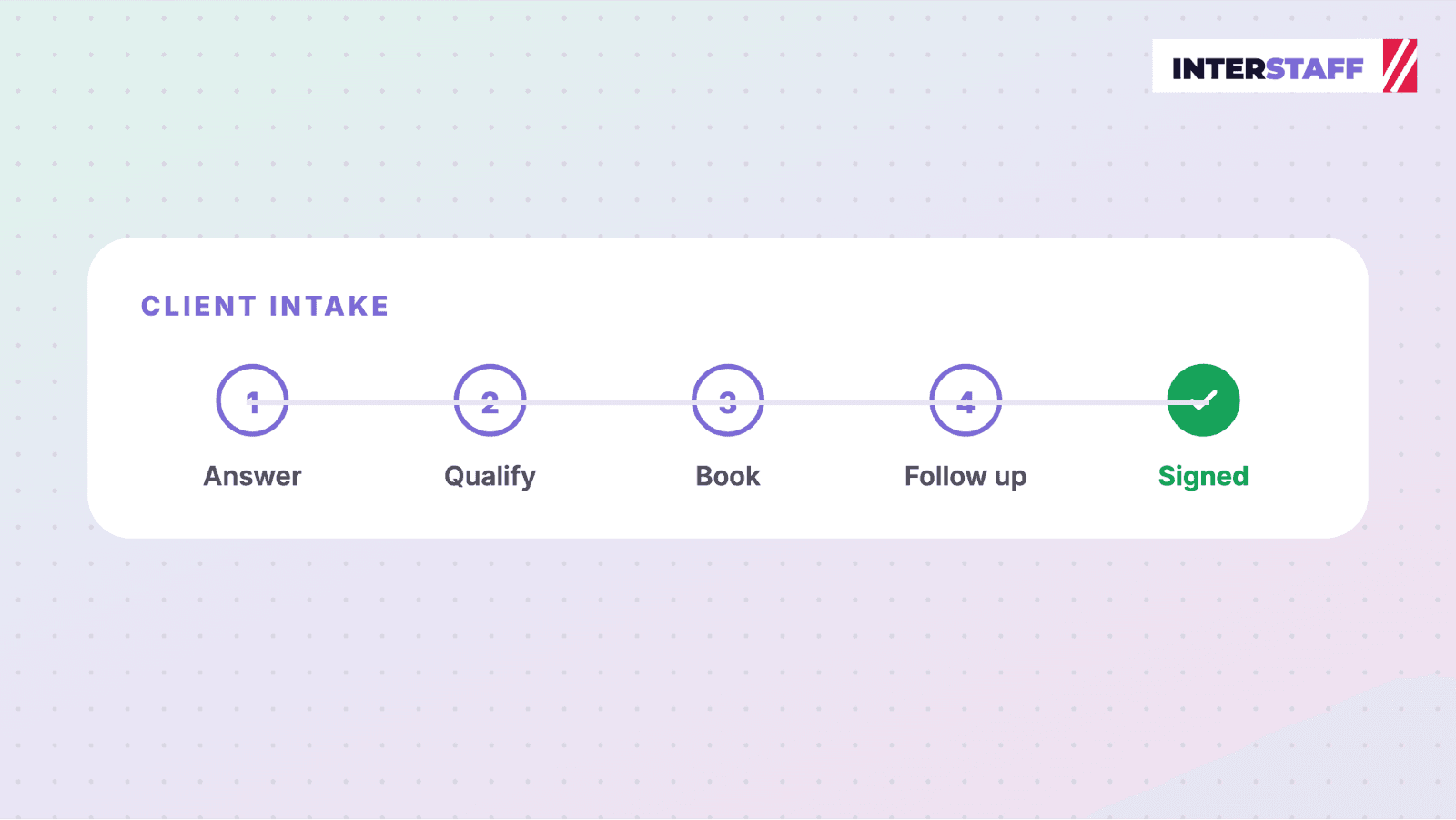
Quick answer: A strong client intake process is the path from a stranger's first call to a signed retainer. Done well it has six steps — answer, qualify, book, confirm, follow up, and sign — and the step most firms skip is the fifth. The follow-up on leads who go quiet is where the majority of lost cases actually leak.
This article is general information, not legal advice. Confirm your own obligations with counsel and review current guidance for your jurisdiction.
Why intake is where cases are won or lost
A person with a legal problem is stressed and in a hurry. They call several firms in a row and hire the one that responds first and sounds ready. Your intake process is the first thing they experience about your firm — long before they meet an attorney. If it is slow, clunky, or stops at voicemail, the case is gone before the merits ever come up.
The 6 steps
1. Answer every call. Not just during business hours — after hours and on weekends too, when many legal emergencies actually happen. Every call sent to voicemail is a lead already dialing the next firm.
2. Qualify the matter. Capture the details your team needs: practice area, jurisdiction, timeline, and whether it is a fit. A good intake sorts the strong matters from the ones you cannot help, fast and kindly.
3. Book the consultation. Put qualified leads straight onto the calendar while they are still on the phone and still motivated. A booked consult beats a "we'll call you back" every time.
4. Confirm and remind. Send confirmations and reminders so booked consults actually show up. A no-show is a case that qualified itself and then evaporated.
5. Follow up on the ones who go quiet. This is the step that separates firms that grow from firms that plateau. A lead who called once, got a voicemail, and never heard back is not a dead lead — they are a warm one waiting for a callback. Following up with people who already reached out is warm, expected, and how responsible firms operate.
6. Sign and hand off. Move the signed client cleanly into your case system so nothing is dropped between "yes" and the first real work.
Where firms get stuck
At a two or three person firm, the attorneys are the intake team. Every new call pulls them off billable work, so calls pile up and follow-up never happens. The process is not broken because anyone is lazy — it is broken because the same people cannot answer the phone and practice law at the same time.
| Attorneys handle intake | Managed intake | |
|---|---|---|
| Speed to first response | Slow — calls wait behind casework | Immediate, around the clock |
| Follow-up on cold leads | Rarely happens | Built in until they book or say no |
| Attorney time | Fragmented | Protected for the law |
| Coverage | Business hours | 24/7, team plus AI |
How to run all six without hiring
You do not need to build a front desk to run a real intake process. A managed partner — trained legal staff plus a managed AI voice agent, wired into your case system — can run every step as an extension of your firm, using your rules, built for ABA and HIPAA standards. Your attorneys stay on the law; the front line stays covered.
We map your intake process end to end, with the follow-up step actually covered, and hand you the plan. Yours to keep, with us or without us.
Book a 15 minute callYou focus on the case. We handle the rest.
FAQ
Questions we get every time.
Yes, when it is warm follow-up to people who already contacted you. Re-engaging your own leads and clients is a known, expected relationship, different in kind from cold-dialing a purchased list. This is general information, not legal advice; confirm your obligations with counsel.
Manuel M.
Operations, Interstaff
Writes for the Interstaff team on staffing, AI, and operations for lean service businesses.